Showing posts with label Literature. Show all posts

Sunday, August 9, 2026

A political and historical critique of David Uclés’s "The Peninsula of Empty Houses"

The following article - book review was originally published in Rizospastis, Organ of the CC of the Communist Party of Greece (KKE), on 8-9 August 2026, under the title "A Publishing Phenomenon of “Equal Distances". Real below the English translation: 

David Uclés’s novel has become a genuine publishing phenomenon. More than 400,000 copies have been sold in Spain, translations have appeared in dozens of languages, and the book has been embraced by critics and readers alike as a major literary fresco of the Spanish Civil War. Precisely because its influence is so extensive, it deserves to be approached critically—not in terms of its literary technique, but of its political content and the way in which it shapes collective memory of one of the most decisive events of the twentieth century.

Sunday, June 11, 2023

Henri Barbusse on the Soviet Union

By Nikos Mottas.

The 17th of May marked the 150th birth anniversary of French novelist, journalist and member of the French Communist Party, Henri Barbusse. He rose to fame following the publication of his novel “Le Feu” (Under Fire) in 1916, which is based on Barbusse's experiences as a soldier on the Western Front during the First World War.

The Great October Socialist Revolution, the the world-changing event of 'the twentieth century, had a profound influence on Barbusse. In January 1918 he left France and moved to Soviet Russia where he joined Lenin's Bolshevik Party. Later, in 1923, he became a member of the French Communist Party. 

Wednesday, June 19, 2019

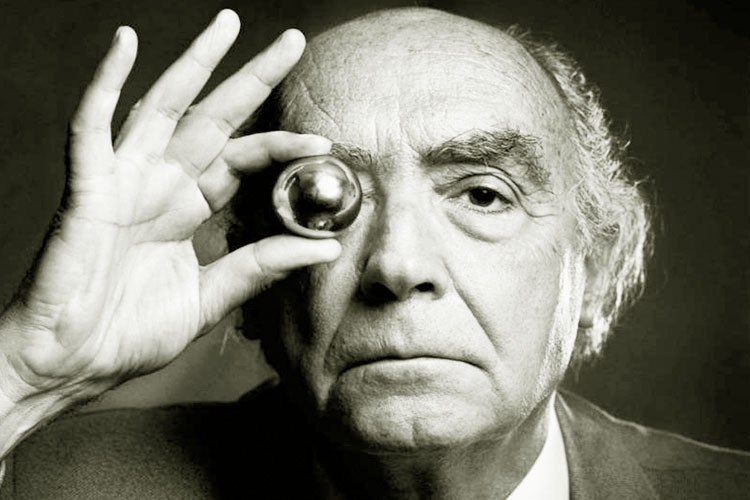
Remembering José Saramago: "We need to change the world"

Nine years have passed since the 18th June 2010, the day when José Saramago, one of the most gifted novelists of the 20th century, died. 

Saramago, was far more than just a novelist, a poet, a playwright and a journalist; he was a philosopher and he was a communist. 

Born on November 16th, 1922 at Azinhaga, a small village in Portugal. In 1924, the Saramago family moved to Lisbon where his father began his new job as a policeman. Just a few months after their settlement in the portuguese capital, Jose's older brother, Franscisco, died. Although Jose was a good pupil, his parents were unable to afford to keep him in grammar school, and instead moved him to a technical school at age 12.